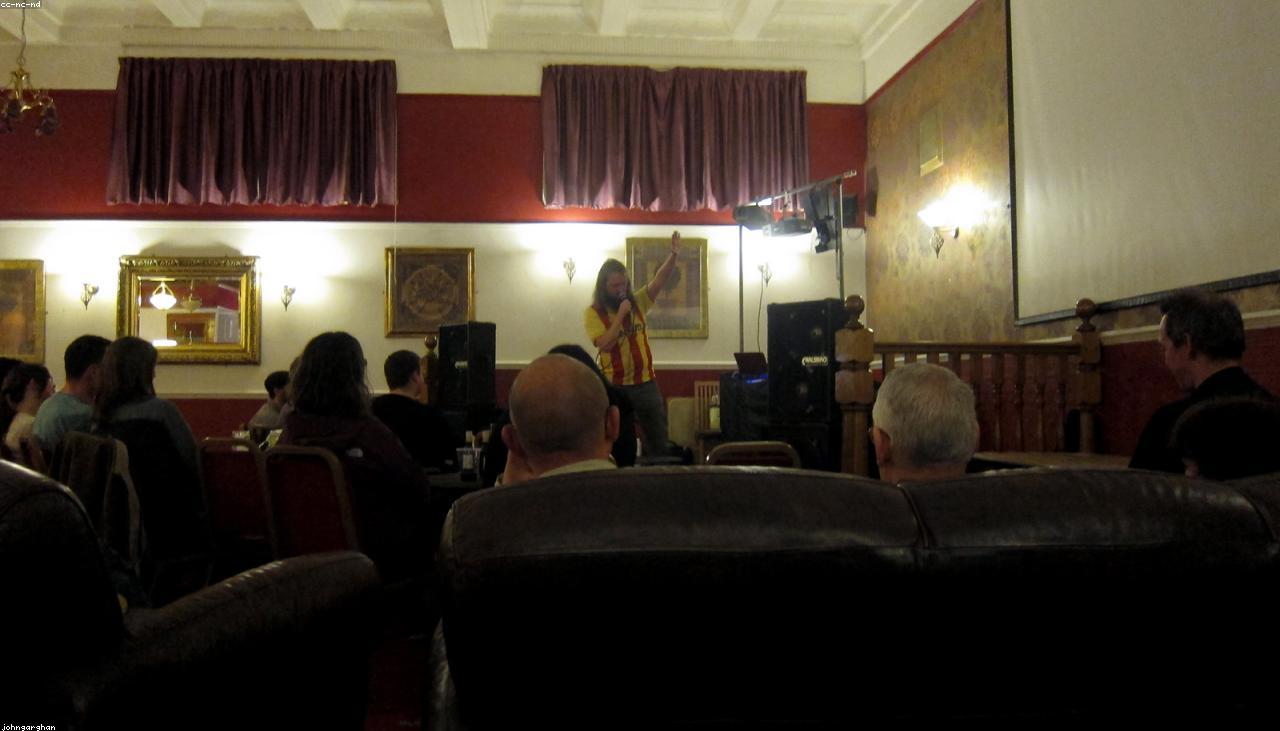
How to Run a Profitable Pub Comedy Night
Last updated: 11 April 2026
Comedy nights in UK pubs aren’t a nice-to-have entertainment add-on—they’re a revenue stream that can generate £800–£1,500 per event if you get the fundamentals right, yet most pubs approach them like a hobby instead of a business.
If you’ve ever watched a comedy night collapse because the comedian didn’t show up, the bar ran out of mixer halfway through the set, or you completely undersold the event, you know the cost of poor planning. A successful pub comedy night requires the same operational discipline as any other trading event—you need proper booking terms, crowd management, pricing strategy, and staffing in place before the comedian steps on stage.
I’ve run regular entertainment events at Teal Farm Pub in Washington, Tyne & Wear, and I can tell you that the difference between a comedy night that breaks even and one that generates real profit comes down to three things: knowing your audience sizing, managing your cost per head, and running your bar efficiently during peak demand.
This guide covers everything you need to know to plan, execute, and profit from comedy nights in 2026—including how to book acts, set ticket prices, manage your space, staff effectively, and avoid the mistakes that kill most pub comedy nights before they start.
If you’re currently running events without a proper system, the changes you make here will immediately improve both your revenue and your operational stress.
Key Takeaways
- A comedy night only works if your pub has the right space—typically 40–100 seated capacity with a defined stage area and separate bar circulation.
- Booking comedians directly through agents costs £200–£600 per act but protects you with written contracts that cover cancellation liability.
- The most profitable comedy night ticket price for UK pubs is £12–£16 including a drink, with a minimum 60-person attendance target to break even.
- Staff planning matters more than entertainment quality—poor bar service during a comedy night will lose you more money than a mediocre comedian will.
Is a Comedy Night Right for Your Pub?
Not every pub should run a comedy night. If your venue is open-plan with no clear separation between the bar area and a potential performance space, or if your typical quiet night covers a Thursday with 15 people, a comedy night will just create noise that annoys your core clientele without generating enough ticket revenue to justify the effort.
Comedy nights work best in pubs that have one or more of these characteristics:
- A separate room or booth seating area that can be closed off or designated for the event
- Regular weekday footfall of 40+ people on a Thursday or Friday
- A young-to-middle-aged demographic (25–55) who actively seek entertainment
- Existing food service capability (comedy nights attract people earlier and for longer if food is available)
- A licensed premises with permission for amplified entertainment (check your licence—some tied houses have restrictions)
Before you book a single act, get written confirmation from your landlord or pubco that you’re permitted to host entertainment events. If you’re a tenant on a tied estate, many pubcos have specific rules about who can perform and what the split of revenue should be. Checking this first costs you nothing. Finding out mid-event that you’ve breached your lease agreement costs you a lot.
The real question isn’t whether comedy nights sound like a good idea—it’s whether you have the operational capacity to staff them properly without compromising your normal service. At Teal Farm, we run comedy alongside our quiz nights and match day events, which means we’ve built specific scheduling and stock management around entertainment events. If you’re currently managing 17 staff across FOH and kitchen using real scheduling systems, you already have the discipline to pull this off. If you’re still doing the rota on a piece of paper in the corner, start there before you add comedy nights to your calendar.
Booking Comedians and Acts in 2026
There are three ways to book a comedian for a pub: through a comedy promoter, directly through a comedian’s agent, or directly through an independent comedian who manages their own bookings.
Using Comedy Promoters
Comedy promoters organise regular comedy events across multiple venues in a region. In 2026, promoters like The Comedy Store and regional circuit promoters handle the entire operation—they provide the comedian, manage ticket sales, handle the PA system, and take a split of ticket revenue (typically 40–60%). The advantage: zero operational risk. The disadvantage: you lose control of the event and the promoter’s revenue split is usually higher than booking independently.
This route works best if you have a small team and want someone else to manage logistics. It doesn’t work well if you want to build a regular, house-branded comedy night that becomes known for quality acts and loyal audiences.
Booking Direct Through Agents
Most working comedians in the UK are represented by agents who manage their bookings, negotiate fees, and handle liability. Agent fees typically range from £200–£600 per act, depending on the comedian’s experience and regional demand. When you book through an agent, you get:
- A written contract specifying the comedian’s fee, arrival time, tech requirements, and cancellation terms
- Assurance that the act is professional and insured
- Control over your event pricing and audience experience
- The ability to build a repeatable comedy event that becomes part of your pub’s identity
To find agent-represented comedians, search regional comedy circuits like Southampton Comedy Circuit or look at UK comedy agency websites. Expect to pay a booking deposit (typically 50% of the fee) at the time of confirmation, with the remainder due one week before the event.
Independent Comedians
Some working comedians manage their own bookings and negotiate directly with venues. This can mean lower fees (£150–£400) because there’s no agent middleman, but it also means no written contract framework and no fallback if the comedian cancels. Independent bookings work well if you have a personal recommendation from another licensee or if the comedian has a strong local following.
Whichever route you choose, always get cancellation liability in writing. What happens if the comedian doesn’t show up 48 hours before the event? What’s your financial exposure? A professional agent will have standard terms. An independent comedian might not. Clarify this before you pay a deposit.
Pricing Your Comedy Night Tickets
Ticket pricing for a pub comedy night needs to balance two things: affordability for your audience and sufficient margin to cover the comedian fee, staffing costs, and lost bar revenue from people paying upfront for a ticket instead of running a tab.
The optimal comedy night ticket price for UK pubs in 2026 ranges from £12–£16 per person, including one drink. Here’s how that math works:
If you charge £15 per ticket including a drink, and your drink cost is £2 (soft drinks, beer, or mixed drink blended), you net £13 per ticket. If you sell 75 tickets, that’s £975 in ticket revenue. After paying a £400 comedian fee, you have £575 to cover venue costs, extra staffing, and marketing. At 80+ people in the room (some will be partners or staff), your bar will naturally generate additional revenue from people buying rounds beyond their included drink.
This calculation assumes you’re selling advance tickets—which is essential. Never rely on door sales alone. Advance ticket sales give you certainty about headcount, allow you to staff accurately, and let you manage stock ordering (crucial for beer and mixers during a comedy event).
If you run comedy nights regularly, pricing becomes easier because you can test and adjust. Your first event is a data gathering exercise. Track:
- Number of advance ticket sales vs. door sales
- Average spend per person on additional drinks (beyond the included drink)
- Cancellation rate (how many people buy tickets but don’t show)
- Net profit after all costs
Use your pub profit margin calculator to work backwards from your target profit and adjust ticket price accordingly.
Crowd Management and Logistics
The biggest operational challenge in a pub comedy night isn’t finding the right comedian—it’s managing the physical space, crowd flow, and bar service when 80–100 people are in your venue at the same time.
Space and Seating
You need a defined stage or performance area—even if it’s just a cleared corner with a stool and microphone stand. Audiences need to see that there’s a boundary between the entertainment space and the bar. If the comedian is standing behind the bar trying to perform over a sea of standing bodies, the event fails.
Optimal layout for a pub comedy night:
- Tables and chairs arranged in the main room, facing the stage area
- A clear standing room zone at the back for latecomers and bar traffic
- Bar entrance/exit that doesn’t funnel people through the middle of the audience
- Toilet access that bypasses the performance area
If you’re a smaller pub without a separate back room, you’re limited to 40–50 capacity for comedy. Don’t try to force 100 people into a space designed for 60. It kills the event experience and creates licensing risk (you’re over fire capacity).
Sound and Technical Setup
Budget £300–£500 for a basic pub-grade PA system: microphone, speakers, and a simple mixer. This is non-negotiable. Every comedian will expect reliable audio equipment. If your mic feedback is cutting out or your speakers are tinny, even a good act sounds mediocre.
Test your system an hour before doors open. Have the comedian do a sound check. Assign one staff member to be your technical operator—their only job is managing volume, starting/stopping music, and troubleshooting audio issues during the event.
Toilet Facilities and Licensing
Comedy nights will put your toilet capacity under genuine stress. If your pub has one small WC with a single cubicle, a 90-person event is problematic. Check your pub licensing law in the UK for your required toilet provision—it’s typically one WC per 20 people for mixed venues. You can’t exceed this without risking a licensing breach.
Staffing and Bar Operations During Comedy Nights
This is where most pubs fail, and it’s also where you’ll make your real profit or lose it completely.
During a comedy night, your bar experiences a fundamentally different trading pattern than normal. Instead of a steady trickle of orders across three hours, you get a surge of 80+ people arriving within 30 minutes, then a flat ordering period during the act itself, then another spike during the interval and at the end.
The most effective way to manage bar operations during a comedy night is to staff for peak demand and use ticket pricing to offset the quiet period during the performance. Don’t try to run comedy nights with your normal Thursday night skeleton crew. You’ll create a queue at the bar, people will get frustrated, and you’ll sell less per head than you should.
Staffing Model for a 75–100 Person Comedy Night
- One person on the door: Taking tickets, managing entry, handling cancellations and walk-ins
- Two people on the bar: Taking orders, pouring drinks, processing payments
- One person managing tables: Taking food orders, clearing empties, managing table service
- One person as a float: Stock management, emergency support, roaming troubleshooting
That’s five staff minimum. If you’re running a comedy night with three staff, you’re underselling and undersevicing.
Use your pub staffing cost calculator to work out the payroll impact. If staffing adds £120 to your costs for the night, your ticket pricing and bar margins need to cover it. This is built into the £15 ticket price I mentioned earlier.
Payment Processing
Comedy night attendees expect card payments. If you’re still running a cash-only operation, upgrade to a basic card terminal (contactless, chip, and PIN at minimum). The last thing you need is a queue of 40 people holding cash while your one till operator tries to process notes and coins. During my evaluation of EPOS systems for a community pub handling wet sales, dry sales, quiz nights, and match day events simultaneously, this was the single biggest operational pain point—most pubs had only one payment terminal, which creates bottlenecks under peak pressure.
Consider a mobile card reader as a backup so you can take payments table-side during and after the performance.
Stock Management
Run a pre-event stock count of your key lines: draught beer, bottled beer, mixers (tonic, lemonade, cola), and spirits if you’re offering cocktails. A 90-person comedy night can empty a standard keg faster than you expect, especially if it’s a Friday or Saturday with a young demographic.
Order an extra keg or two if you’re unsure. Selling out of your main beer halfway through the event because you underestimated demand is a genuine profit killer.
Marketing Your Pub Comedy Event
You can book the best comedian in the region and still have a half-empty room if nobody knows the event is happening.
Start marketing at least four weeks before the event. Use your pub WiFi marketing to promote the comedy night to customers—email lists, in-pub posters, and social media. If you have a beer garden or high foot traffic, consider a branded A-board outside on the day.
On your marketing, be specific: comedian name (if it’s a known act), date, start time, ticket price, and the type of comedy (observational, topical, musical, etc.). People buy tickets based on the act, not because they love your pub. Make the act the star of the promotion.
Advance ticket sales through an online booking system (Eventbrite, Ticketmaster, or your own website) are worth their commission because they drive certainty and allow you to manage capacity accurately. The 5% platform fee you pay is worth the headcount confidence you get.
Post-event, ask attendees to comment on the night. Use feedback from your first few comedy events to refine your second and third events. A pub that runs four comedy nights a year and improves each one becomes known as “the comedy night pub” in your region—that’s a competitive advantage worth building.
📊 Your EPOS tells you what sold. Pub Command Centre tells you whether you made money.
Real-time labour %, cash position and VAT liability in one dashboard. Built by a working pub landlord. £97 once, no monthly fees. 30-day money-back guarantee.
Frequently Asked Questions
How much should I charge for a pub comedy night ticket in the UK?
The optimal price is £12–£16 per ticket including one drink. This nets £13–£14 per ticket after drink cost, allowing you to cover a £300–£500 comedian fee while building margin. Advance online ticket sales are essential to predict headcount and avoid last-minute refunds.
What happens if the comedian cancels the night before my comedy event?
This is why written contracts matter. Your booking agreement should specify cancellation liability and how you’re reimbursed if the act fails to show. With a professional agent, you typically get a replacement act or a full refund of the fee. With an independent comedian, you may have no recourse. Always confirm cancellation terms before paying a deposit.
Can I run a comedy night if my pub is small or doesn’t have a separate room?
Yes, but with limits. A small pub can successfully host 30–50 people for comedy in the main bar if you clearly designate a stage area and manage bar traffic carefully. Anything larger requires a separate space or you’ll compromise both the audience experience and your bar service quality.
How many staff do I need to run a comedy night for 80+ people?
Minimum five staff: one on the door, two on the bar, one managing tables, and one as a float for stock and troubleshooting. Running comedy nights with fewer staff creates queues, poor service, and lost revenue. Staff costs should be built into your ticket pricing model from the start.
Should I book comedians through a promoter or directly through an agent?
Direct agent bookings give you more control, better margins, and the ability to build a house brand around comedy. Promoters are easier operationally but take a higher cut (40–60% of ticket revenue). If you’re running regular comedy nights, direct bookings through agents (£200–£600 per act) pay for themselves within two to three events.
Running comedy nights means adding another layer of operational complexity to your pub’s calendar.
The difference between profit and loss comes down to staffing discipline, accurate pricing, and knowing your space limits before you book the comedian. Smart pub operators manage entertainment events with the same rigor they use for quiz nights and match days—with clear roles, written contracts, and reliable systems.
Take the next step today.
For more information, visit pub profit margin calculator.
For more information, visit pub drink pricing calculator.
For more information, visit pub IT solutions guide.
The pub management system used at Teal Farm keeps labour at 15% against the 25–30% UK average across 180 covers.