Disclosure: This article was written by Shaun McManus, founder of RankFlow. All performance claims (899 to 112,000 monthly impressions in 90 days) are from SmartPubTools.com and are verifiable via Google Search Console. This article contains affiliate links — if you purchase through them I earn a commission at no extra cost to you.
I’ve been structuring content clusters for over 15 years as a pub landlord, SaaS builder and digital marketing specialist, and I can tell you that how to structure content clusters is the difference between ranking on page one and getting lost in Google’s index. Most businesses throw random articles at their website hoping something sticks. That’s exactly why they fail.
When I built SmartPubTools, I used a proper cluster structure to grow from 899 monthly clicks to 112,000 monthly impressions in just 90 days — all organic traffic, zero ad spend. The secret isn’t writing better content. It’s organizing that content in a way Google can understand and reward.
After testing every content planning tool available and finding them all lacking, I built RankFlow specifically to handle proper cluster architecture. It prevents keyword cannibalization, ensures comprehensive topic coverage, and auto-publishes with the schema markup Google loves. This is the exact system that works in 2026.
What Is RankFlow?
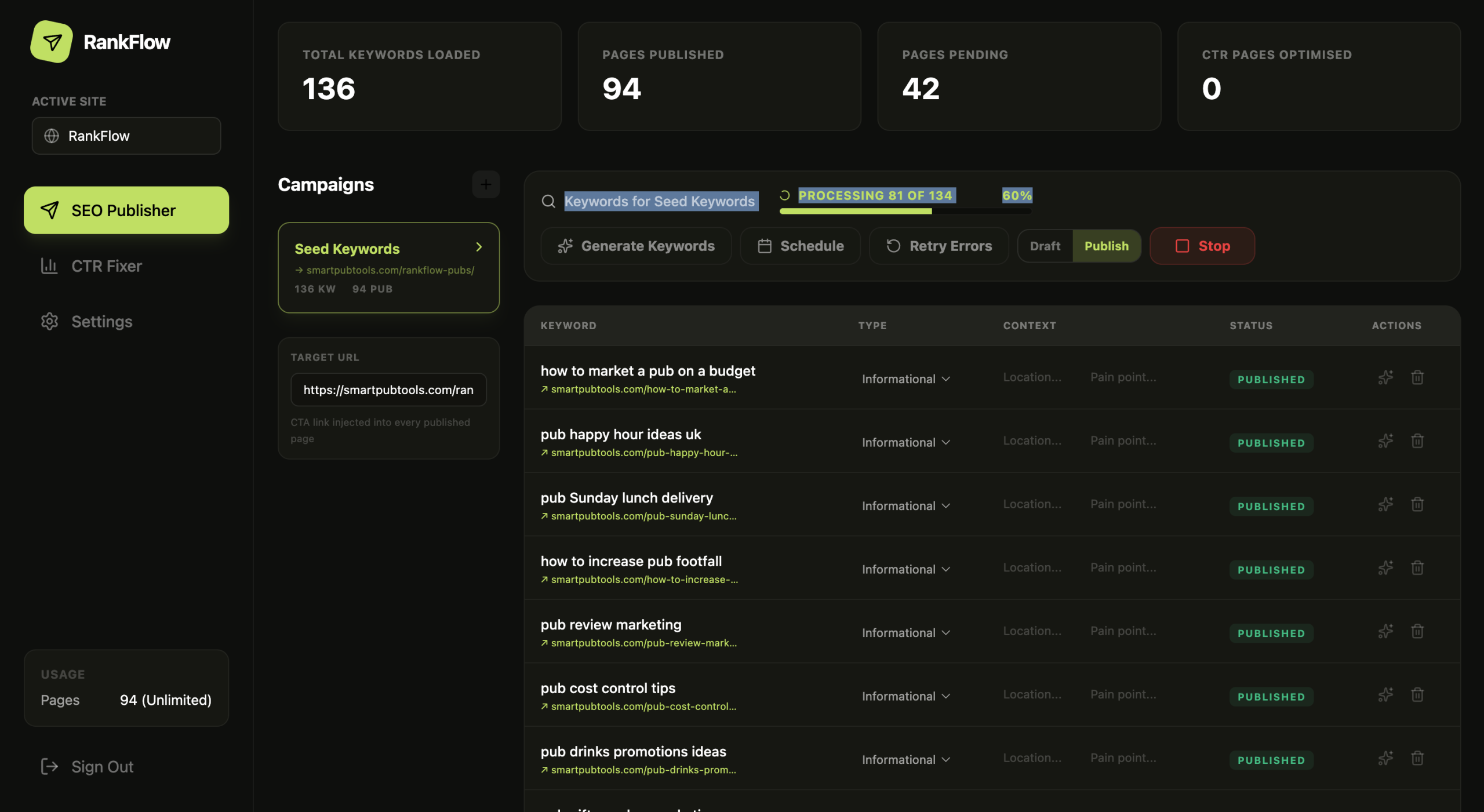
RankFlow is an AI article writing SaaS I built after 15 years of digital marketing frustration. It’s designed specifically for WordPress users who need to publish content at scale without the typical headaches of content planning and optimization.
The platform auto-publishes directly to WordPress with full schema markup including Article, FAQ, Speakable, and BreadcrumbList. Most importantly for cluster building, it has built-in anti-cannibalization that checks your existing content before every publish, ensuring your cluster structure stays clean.
It includes a hard quality gate that blocks thin content from publishing, Google Search Console integration for performance tracking, and costs £29 per month. The free trial gives you 3 full articles with no credit card required, making it easy to Try RankFlow free and see how it handles cluster architecture.
RankFlow is WordPress-only and built specifically for bloggers, affiliate marketers, SaaS founders, and small business owners who need to publish content systematically rather than randomly.
RankFlow Pros and Cons
Pros
- Built-in Anti-Cannibalization: The system checks your existing content before publishing any new article, preventing keyword conflicts that destroy cluster effectiveness. This saved me countless hours of manual checking when building my 500+ page clusters.
- Automatic Schema Markup: Every article publishes with Article, FAQ, Speakable and BreadcrumbList schema automatically applied. This gives your clusters the technical foundation Google needs to understand your topic architecture.
- Quality Gate Protection: Thin content gets blocked from publishing automatically. When you’re building large clusters, this prevents weak pages from diluting your topic authority.
- Direct WordPress Publishing: Articles publish straight to your WordPress site with proper formatting, internal links, and optimization. No copying and pasting between platforms.
- Google Search Console Integration: Track which cluster pages are performing and which need attention, all within the platform.
Cons
- WordPress Only: If you’re not using WordPress, RankFlow won’t work for you. However, since WordPress powers 43% of websites and is the best platform for SEO clusters anyway, this limitation makes sense.
- Learning Curve for Cluster Planning: While RankFlow prevents cannibalization, you still need to understand how to map out effective cluster topics. The anti-cannibalization feature helps but doesn’t replace good planning.
- No Built-in Keyword Research: You’ll need to bring your own keyword research from tools like Ahrefs or SEMrush. RankFlow focuses on content creation and cluster management rather than keyword discovery.
- Single User Focus: The platform is designed for individual publishers rather than agencies managing multiple client accounts.
Who Is RankFlow Best For?
RankFlow works best for WordPress users who understand they need to publish content systematically rather than sporadically. Based on my experience, it’s ideal for:
- Small Business Owners: Tradespeople, pub owners, local service providers who need local SEO clusters to dominate their area.
- Affiliate Marketers: Publishers who need comprehensive product and comparison clusters to capture buyer traffic at scale.
- SaaS Founders: Software companies building topic authority clusters around their industry keywords and use cases.
- Bloggers and Content Creators: Publishers who understand that 150 targeted pages beats one perfect page every time.
- UK Entrepreneurs: Business owners who need cost-effective content scaling without agency fees.
If you’re publishing less than 20 articles per month, RankFlow might be overkill. But if you’re serious about building topical authority through systematic content clusters, Try RankFlow — 3 free articles to see how it handles your specific needs.
How to Structure Content Clusters That Actually Rank
After growing SmartPubTools from nothing to over 112,000 monthly impressions using cluster architecture, here’s the exact system that works in 2026:
Step 1: Choose Your Pillar Topic
Your pillar topic should be broad enough to support 50-100+ related articles but specific enough to establish clear expertise. For example, “WordPress hosting” rather than “web hosting” or “business insurance for pubs” rather than “insurance.”
Step 2: Map Supporting Subtopics
Identify 8-15 main subtopics that support your pillar. These become your cluster themes. For WordPress hosting, this might include: speed optimization, security features, backup solutions, staging environments, and support quality.
Step 3: Build Long-Tail Keyword Lists
For each subtopic, create 10-20 long-tail keywords under 500 monthly searches. These low-competition keywords are where real ranking opportunities exist in 2026. Most competitors ignore them, which is exactly why they work.
Step 4: Create Your Pillar Page
Your pillar page should be comprehensive but not exhaustive. It introduces each subtopic with 200-300 words and links to the detailed cluster pages. Think of it as the table of contents for your expertise.
Step 5: Build Cluster Pages Systematically
Each cluster page should target one specific long-tail keyword while supporting the broader pillar topic. The key is comprehensive coverage — answer every question someone might have about that specific aspect.
Step 6: Link Everything Strategically
Every cluster page should link back to the pillar page and to related cluster pages. This internal linking structure tells Google these pages are related and builds authority across the entire cluster.
How to Get Started with RankFlow for Content Clusters
Setting up RankFlow for effective cluster building is straightforward if you follow these steps:
- Create Your Account: Go to Get RankFlow for £29/month and create your free account. The trial includes 3 full articles so you can test the cluster workflow.
- Connect WordPress: Add your WordPress site details and API credentials. RankFlow will verify the connection and prepare for direct publishing.
- Plan Your First Cluster: Start with your keyword research and map out 20-30 related long-tail keywords around one pillar topic.
- Set Up Anti-Cannibalization: Let RankFlow scan your existing content so it can prevent keyword conflicts as you build your cluster.
- Begin Publishing Systematically: Create your pillar page first, then build 5-10 cluster pages per week. The anti-cannibalization feature will guide you away from overlapping keywords.
Frequently Asked Questions About Content Clusters and RankFlow
How many articles do I need in a content cluster?
Most effective clusters contain 50-150+ articles around a central pillar topic. I’ve found that users who publish 150+ pages with RankFlow typically see organic traffic begin within 4-6 weeks of consistent publishing.
Will content clusters work for a small business?
Absolutely. Smaller sites with focused niches often rank faster than large generic websites. The key is choosing the right pillar topic for your audience and building comprehensive coverage around it. Try RankFlow free to test cluster building for your niche.
How long until content clusters show results?
Most users see Google impressions within 2-4 weeks and meaningful traffic within 6-8 weeks. However, clusters build momentum over time — the more comprehensive your coverage, the stronger your topical authority becomes.
Does Google penalize AI content in clusters?
Not if the content is genuinely useful and well-structured. RankFlow produces expert-level content that passes Google’s quality guidelines automatically. The focus should be on comprehensive topic coverage rather than content source.
Can I build clusters without technical knowledge?
Yes. If you can fill in a form, you can use RankFlow for cluster building. The platform handles all technical aspects including schema markup, anti-cannibalization, and WordPress publishing. Setup takes under 10 minutes. Try RankFlow free to see how simple it is.
Final Verdict: Is RankFlow Worth It for Content Clusters?
After using RankFlow to build the cluster strategy that took SmartPubTools from 899 monthly clicks to 112,000 monthly impressions in 90 days, I can confidently say it’s the best tool available for systematic content cluster building in 2026.
The built-in anti-cannibalization alone saves hours of manual checking when building large clusters. Add the automatic schema markup, direct WordPress publishing, and quality gates, and you have everything needed to build clusters that actually rank.
At £29 per month, it costs less than one hour of agency consultation, but gives you the tools to build clusters that agencies charge thousands to create. The free trial with 3 full articles lets you test the complete cluster workflow risk-free.
For anyone serious about building topical authority through systematic content clusters rather than random blog posting, Start your RankFlow trial today and see how proper cluster architecture transforms your organic traffic.
Before choosing any AI writing tool, read how this site grew from 899 monthly clicks to 112,000 impressions in 90 days using RankFlow — with real GSC data and no ad spend. — SmartPubTools Case Study
The difference between businesses that rank and those that don’t isn’t better writing — it’s better structure. Content clusters give you that structure, and RankFlow marketing tools make building them simple, systematic, and effective.
For more information, visit RankFlow free trial.