The dream of running a quintessential British pub—pulling pints, stoking the fire, being the heart of a local community—is a powerful and romantic one. However, the business reality of 2024 is vastly different. Recent industry reports and financial data reveal a quiet but massive revolution is underway, transforming the very definition of a pub and the strategies required to run one successfully. The industry is undergoing seismic shifts, from a 190-year-old brewer quitting brewing altogether to local pubs becoming community-focused ESG projects complete with beehives and vape recycling bins. Here are the four surprising truths about the modern British pub.
——————————————————————————–
Running this problem at your pub?
Here's the system I use at The Teal Farm to fix it — real-time labour %, cash position, and VAT liability in one dashboard. 30-minute setup. £97 once, no monthly fees.
Get Pub Command Centre — £97 →No monthly fees. 30-day money-back guarantee. Built by a working pub landlord.
1. The Great Uncoupling: Why a 190-Year-Old Brewer Quit Brewing
In a monumental strategic shift, Marston’s, a cornerstone of British brewing, has sold its 40% stake in the Carlsberg Marston’s Brewing Company (CMBC). This move fundamentally redefines the company’s identity and signals a wider industry transformation.
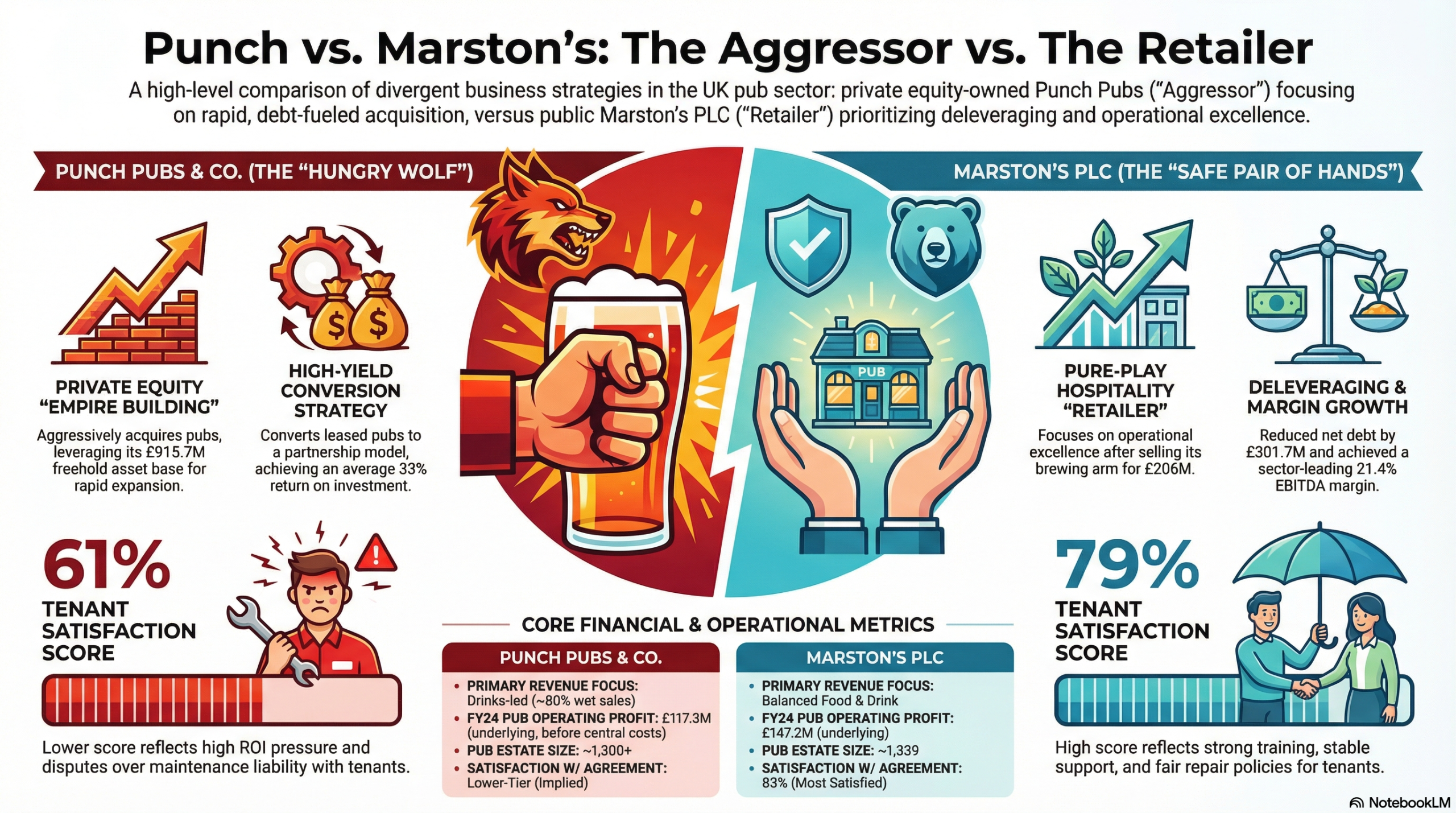
Marston’s is no longer a traditional brewer. The sale transforms it into a “pure-play hospitality business” focused exclusively on running its 1,339 pubs. The primary driver for this decision was financial: the deal enabled a material reduction in net debt of over £300 million, significantly strengthening the company’s balance sheet.
The strategic implication is clear: one of the UK’s major pub companies now operates as a specialized “retailer” of pub experiences, not a manufacturer of beer. This uncoupling of brewing from pub management marks a fundamental change in the business model of large pub companies, prioritizing hospitality operations and financial flexibility over vertical integration.
“2024 has been a defining year for Marston’s as we began an exciting new chapter as a leading pure-play hospitality business. The sale of our stake in CMBC has been transformational, enabling us to significantly reduce debt, increase our flexibility and focus on what we do best: running great local pubs.”
— Justin Platt, CEO of Marston’s PLC
The Quiet Revolution of the British Pub
From 190-year-old brewers quitting beer to local boozers saving the bees.
The dream of running a quintessential British pub—pulling pints, stoking the fire, being the heart of a local community—is a powerful and romantic one. However, the business reality of 2024 is vastly different. Recent industry reports reveal seismic shifts, transforming the very definition of a pub and the strategies required to run one successfully.
Why a 190-Year-Old Brewer Quit Brewing
In a monumental shift, Marston’s has sold its 40% stake in the Carlsberg Marston’s Brewing Company. This uncouples brewing from pub management, transforming Marston’s into a “pure-play hospitality business.”
- Debt Reduction: The deal cut net debt by over £300m.
- New Identity: No longer a manufacturer, but a specialized retailer of experiences.
“The sale… enabling us to focus on what we do best: running great local pubs.”
— Justin Platt, CEO Marston’s PLC
The New Local
ESG & Community
Bees, Vapes, and No-Alcohol
The modern pub is repositioning itself as a hub for environmental impact. Punch Pubs’ “PROMISE” report reveals initiatives that would have been unimaginable a decade ago.
Biodiversity
Pollinator Pubs” creating biodiverse gardens for local wildlife.
Modern Waste
Specialized recycling bins for disposable vapes.
No/Low Alcohol
Laine pubs saw a 203% increase in low/no alcohol sales.
Well-being
Partnerships with Mind to champion mental health.
The Landlord’s Dilemma
Choosing a partner: The “Safe Retailer” vs. The “Hungry Wolf”
Marston’s
Publicly traded, consistent, focused on guest experience standards.
79% (High)
“Safe pair of hands”
High Wage Bill
Food-led “Pillar Partnership” often requires full kitchen brigades.
Punch Pubs
Private Equity owned, aggressive, fast-moving, ROI focused.
61% (Mid-tier)
“Empire Builder”
Lower Wage Bill
Drink-led models often require significantly fewer staff.
The Battle for Landlords: Debt vs. Investment
The Great Satisfaction Flip
A “Momentum War” has emerged between Marston’s and Heineken’s Star Pubs.
-
Star Pubs:
Surging satisfaction due to £40m investment from Heineken. -
Marston’s:
On a “Debt Diet” (£883m post-sale). Momentum slowing as CapEx tightens.
The Critical Safety Net
Despite differing strategies, both giants offer a game-changing benefit for new tenants in a volatile energy market:
Parent Company Covers Energy Bills
*Available in specific franchise/pillar models
——————————————————————————–
2. Your Local Is Now a Social Impact Hub (With Bees and Vape Bins)
The modern pub company’s strategy extends far beyond pints and profits. As detailed in the Punch Pubs “PROMISE” ESG report, there is a surprising trend of embedding deep social and environmental goals into core business operations, repositioning the local pub as a hub for community and environmental impact.
A look at Punch’s initiatives reveals a scope of activity that would have been unimaginable a decade ago:
• Biodiversity Boost: The “Pollinator Pubs” campaign, in partnership with the Eden Project, is creating biodiverse spaces in pub gardens to help local bees and wildlife thrive.
• Modern Waste Management: To tackle a uniquely modern waste problem, vape recycling bins are being installed in its Laine pubs.
• Community Services: Pubs like The Trelowarren Arms are hosting mobile post office services and other community-centric events, reinforcing their role as vital local hubs.
• Well-being Focus: Through partnerships with organizations like Mind and People’s Captain, pubs are actively championing mental health and well-being.
This shift is also reflected in what customers are drinking. The traditional “pub = beer” model is being challenged by a massive growth in the Low and No-alcohol category. Punch saw a 55% increase in serves of these drinks in just one year, while its sister company Laine saw sales increase by an astonishing 203% compared to the previous year, far surpassing its internal targets.
“Pubs are the beating heart of communities, playing multifaceted roles in local daily life across the country, so it is vital that we operate with people at the core of our business.”
— Clive Chesser, CEO of Punch Pubs & Co
——————————————————————————–
3. The Landlord’s Dilemma: Choosing the “Safe Retailer” or the “Hungry Wolf”
For a potential landlord, choosing a pub company partner is a critical decision between two fundamentally different business philosophies. An analysis from smartpubtools.com frames the choice between Marston’s and Punch as a strategic alignment of personality and ambition.
The two companies present contrasting models:
• Marston’s (“The Retailer”): A publicly-traded company, Marston’s operates with the consistency of a retailer, focusing on high standards and guest experience. This is reflected in its high tenant satisfaction score of 79% in the Pubs Code Adjudicator (PCA) survey, making it a “safe pair of hands.”
• Punch (“The Hungry Wolf”): Owned by private equity, Punch is described as more aggressive and fast-moving, focused on empire-building and return on investment. This high-pressure environment is reflected in its mid-tier satisfaction score of 61%.
However, a hidden, counter-intuitive insight lies in what smartpubtools calls the “Wage Bill Effect.” Marston’s food-led “Pillar Partnership” often requires a larger staff, including a full kitchen brigade, which significantly increases wage costs. In contrast, Punch’s typically more drink-led ‘Management Partnership’ requires fewer staff than a food-heavy operation like Marston’s ‘Pillar Partnership’. For a new operator focused on controlling overheads, the lower wage bill can make Punch a potential “hidden winner.” The Pub Command Centre can help you track and manage this more effectively.
“Marston’s is a slow, steady cruise ship. Punch is a speedboat driven by Private Equity. Punch gives you a shiny bar today, but expects results tomorrow.”
— smartpubtools.com analysis
——————————————————————————–
4. The Battle for Landlords: A Pub Giant on a “Debt Diet” vs. a Rival’s Spending Spree
A significant power shift is underway in the competition to attract and retain the best landlords. The “momentum war” between Marston’s and Star Pubs (owned by Heineken) is defined by two diverging financial strategies.
This has led to what one analysis calls “The Great Satisfaction Flip”:
• Star Pubs has become the “most improved” landlord in the sector. Tenant satisfaction has surged after its parent company, Heineken, announced a £40 million investment into its pub estate, funding major refurbishments and winning over operators.
• In contrast, Marston’s—a direct consequence of the strategic pivot detailed earlier—is on a strict “debt diet” to reduce its significant net debt, which stood at £883.7 million post-CMBC sale. While still highly rated with a 79% satisfaction score in the official 2024 PCA survey, its momentum has slowed in other analyses. One industry report notes a slip to 72%, dropping it from its undisputed ‘Gold Standard’ position as investment-focused rivals gain ground.
Despite these diverging strategies, both companies offer a critical, but often overlooked, safety net. In their franchise-style models, both Star’s “Just Add Talent” and Marston’s “Pillar Partnership” cover the pub’s energy bills. In a volatile market where utility costs can be crippling for independent operators, having the parent company absorb this massive financial risk is a game-changing benefit for new tenants.
“Marston’s is cutting debt; Heineken is writing checks. Who would you rather partner with?”
— smartpubtools.com analysis
——————————————————————————–
Conclusion
The quaint, unchanging image of the Great British Pub is being rapidly replaced by a dynamic, strategic, and surprisingly complex business landscape. The industry is transforming on every level: major players are pivoting from brewers to pure retailers; the local pub is evolving into a social and environmental hub; and the choices facing new landlords are more nuanced than ever, weighing the benefits of steady partnership against aggressive investment. As the competition for the loyalty of talented operators intensifies, the playbook for running a successful pub is being completely rewritten.
As the British pub continues its evolution from a simple public house into a multifaceted social and business enterprise, what do you believe the pub of 2030 will—or should—look like?
Running your pub on gut feel?
The Pub Command Centre gives you wet GP%, cellar checks, staff cost and weekly P&L — from your phone, every shift. £97 once. No subscription.
See the Pub Command Centre →